
Product Introduction
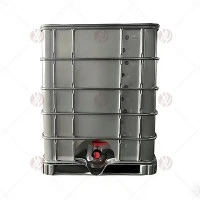
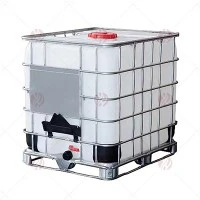
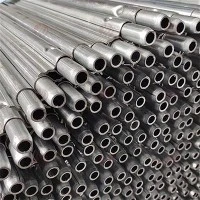
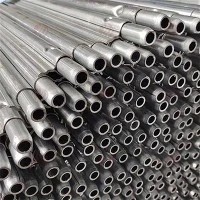
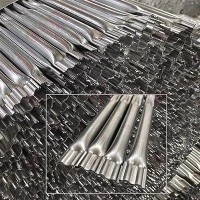
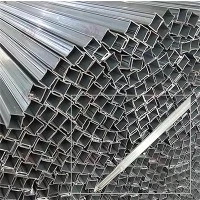
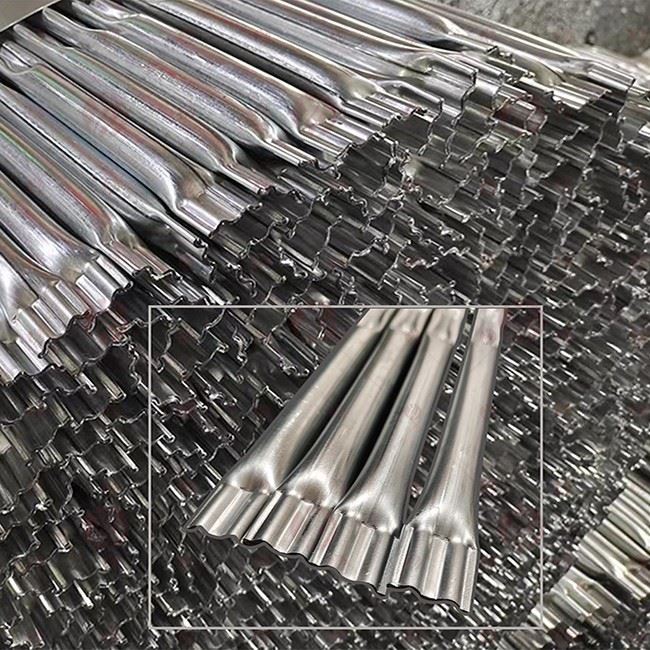
Every IBC frame begins as bare steel tube, and this one is ours. We cold-form the IBC steel tube into a galvanized hollow section, then cut, punch and bend it into the frame members you see on a finished tonne container. Square and rectangular profiles cover most of the demand, usually in S250GD or Q235B. The standard wall runs 1.0 mm, and we hold 0.9, 1.2 or 0.8 mm for customers who order to a different spec. The tube itself is raw stock and nothing dramatic happens at this stage. Downstream it decides almost everything: how clean the welds run, how long the cage lasts outdoors, and whether the finished frame sits square on the pallet. Some buyers run their own welding line and order the IBC steel tube in bulk to build the cage in-house. Others only need spares, and those customers ask for it precut to their drawing, delivered to the bench with the hole pattern already punched.
Material & size
|
Parameter |
Specification |
|
Thickness |
1.0 mm (standard); 1.2 mm / 0.9 mm / 0.8 mm also available |
|
Zinc coding |
Z80 (>80 g/m²) |
|
Length |
1035 mm |
|
Width |
16 mms |
Features
Cold-formed square and rectangular hollow section, hot-dip galvanized to ISO 1461.
The grades we run most are S250GD, S235JR and Q235B, and the standard wall is 1.0 mm with 0.9 mm or 1.2 mm to order.
Automatic saws cut every length to the drawing, so jigs stay aligned on the welding bench.
Punching and drilling happen inline, which keeps hole patterns true across a whole production run.
Fine deburring and rounded corners make the tube safer to handle and kinder to the inner liner.
Zinc pick-up of 60–80 g/m² lets a bundle sit through a wet season in the yard without rust streaks.
Bundles, stillages and container loads all ship, and mill certificates come on request.
Ends can be swaged or flattened for customers who weld their own corner joints.
Working Principle
Load Path: The tube is only as useful as the frame it feeds. Once welded into a horizontal or vertical member, the section carries the liquid weight down to the pallet corner feet. Wall thickness and weld penetration both matter here.
Corrosion Barrier: Galvanizing puts a zinc layer between the steel and the weather. When a scratch exposes bare metal, the zinc around it sacrifices itself first, and the coating survives handling damage far better than paint does.
Formability and Weld: Low-carbon galvanized grades bend without cracking. One coil becomes a straight rail, another a folded corner bracket. We keep zinc off the weld zone when a customer plans to TIG the joints, because the IBC steel tube only performs if the joint behind it does.
Applications
Frame tube and cross tube production for IBC cage assembly lines.
Pallet base bars, corner posts and cage top rails.
Replacement tube stock for container repair and re-galvanizing shops.
OEM frame builders who want the section but do their own fabrication.
General galvanized tube stock for the IBC supply chain, sold by the bundle or the container load.
Hot Tags: ibc steel tube, China ibc steel tube manufacturers, suppliers, factory, ibc components, ibc steel frame, IBC Steel Pipe, IBC Steel Rod, IBC Steel Tie Bar, Top Horizontal Tube