
Breakthrough in Capacity and Space Efficiency
Large Capacity Design: IBC containers have a standard volume of 1000 liters (approximately 1 ton), five times that of traditional 200-liter steel drums, significantly reducing the number of containers required. According to data from the International Bulk Container Association, single-shipment volume can be increased by 40%, and logistics costs reduced by 20%.
Stacking Saves Space: IBC containers can be stacked vertically 2-3 layers, increasing warehouse space utilization by 30%-50%. For example, a 40-foot container can hold 20-24 IBC containers, while traditional drums can only hold 80-100, resulting in significant space waste.
Cost and Environmental Advantages
Lower Long-Term Costs: IBC containers are made of high-density polyethylene (HDPE) or stainless steel and can be reused for 5-10 years, while traditional steel drums have an average lifespan of only 2-3 years. According to statistics from the European Packaging Association, recycling IBC containers can reduce packaging costs by more than 60%.
Reduced Waste: IBC containers are 100% recyclable after disposal, while traditional containers have a recycling rate of less than 70% due to lining contamination. Case studies from chemical companies show that switching to IBC containers reduced annual waste by 15 tons.
Safety and Ease of Operation
Leak-proof Design: IBC containers come standard with double-layer valves and explosion-proof membranes, with a leakage rate of less than 0.1% (compared to 1%-2% for traditional containers), meeting UN-certified standards for hazardous chemical transport.
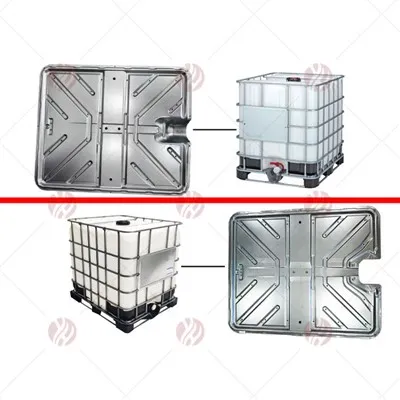
Mechanized Operation: The bottom forklift bay and top lifting design increase loading and unloading efficiency by 3 times, reducing manual handling by 80%. Feedback from food industry users indicates that filling time has been reduced from 2 hours/container to 20 minutes/container.
Expanded Industry Adaptability
Multi-industry Applicability: IBC containers can be adapted to the chemical, pharmaceutical, and food industries by changing the inner liner (e.g., food-grade PE, antistatic coating). For example, after Coca-Cola adopted IBC containers, its juice transport loss rate decreased from 5% to 1%. Temperature control extension: Some models are equipped with an insulation layer, which can be used stably in environments ranging from -40℃ to 60℃, while traditional barrels need to be wrapped with additional insulation material, increasing the cost by 25%.