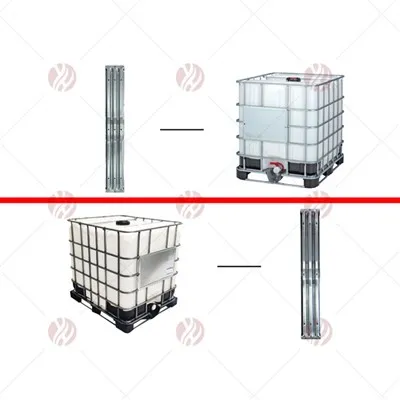

IBC containers, or medium bulk containers, are storage and transportation containers widely used in various industries. Based on differences in materials, structure, usage scenarios, and functional requirements, IBC containers can be categorized into several types.
Firstly, in terms of materials, IBC containers are mainly divided into three categories: plastic IBC containers, metal IBC containers, and composite material IBC containers. Plastic IBC containers are typically made of plastics such as high-density polyethylene (HDPE), offering advantages such as light weight, corrosion resistance, and lower cost. Therefore, they are widely used in industries such as chemical, food, and pharmaceutical for storing and transporting various liquids and solid materials. Metal IBC containers are primarily constructed from metals such as stainless steel and carbon steel, possessing good strength and durability. They are suitable for storing high-density liquids or in applications requiring high-temperature and high-pressure environments, such as in the petroleum and chemical industries. Composite material IBC containers combine the advantages of multiple materials, such as glass fiber reinforced plastic (FRP), exhibiting excellent pressure resistance and chemical stability, making them particularly suitable for the storage and transportation of specialty chemicals.
Besides material classification, IBC containers can also be subdivided into various forms based on their structure, such as vertical, horizontal, and collapsible. Vertical IBC containers have a compact structure, occupy little space, and are easy to stack and transport; horizontal IBC containers have a larger capacity and a more stable structure, suitable for applications requiring large-scale storage and transportation; collapsible IBC containers can be folded up when not in use, saving space and facilitating recycling and reuse.
Furthermore, with increasing environmental awareness and technological advancements, the design of IBC containers is constantly being optimized. For example, IBC containers made from recyclable materials not only reduce production costs but also decrease environmental impact; IBC containers with added recycling functions further enhance their sustainability and economic efficiency.