
Hey there! I'm a supplier of Ball Welding Valves, and today I want to chat about whether a Ball Welding Valve can be automated. It's a hot topic in the industry, and I've got some insights to share.
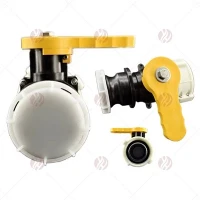
Let's start by understanding what a Ball Welding Valve is. A Ball Welding Valve is a type of valve that uses a ball to control the flow of fluid. It's a popular choice in many industries because of its reliability and durability. The ball in the valve rotates to open or close the flow path, allowing for precise control.
Now, the big question: Can a Ball Welding Valve be automated? The short answer is yes. Automation has become a game-changer in the valve industry, and Ball Welding Valves are no exception. There are several reasons why automating a Ball Welding Valve makes sense.
First of all, automation improves efficiency. With an automated Ball Welding Valve, you can control the valve remotely, which means you don't have to be physically present to operate it. This is especially useful in large industrial settings where valves are spread out over a wide area. You can open or close the valve with just a few clicks on a computer or a mobile device, saving time and effort.
Secondly, automation enhances safety. In some industries, such as oil and gas, working with valves can be dangerous. Automated Ball Welding Valves can be programmed to respond to certain conditions, such as high pressure or temperature. If a problem is detected, the valve can automatically close, preventing potential disasters. This reduces the risk of accidents and protects workers.


Another advantage of automation is accuracy. Automated Ball Welding Valves can be set to open or close at specific intervals or when certain parameters are met. This ensures that the flow of fluid is precisely controlled, which is crucial in many applications. For example, in a chemical plant, accurate flow control is necessary to ensure the quality of the products.
So, how can you automate a Ball Welding Valve? There are several ways to do it. One common method is to use an electric actuator. An electric actuator is a device that converts electrical energy into mechanical motion. It can be attached to the valve and controlled by a computer or a control system. When a signal is sent to the actuator, it rotates the ball in the valve to open or close the flow path.
Another option is to use a pneumatic actuator. A pneumatic actuator uses compressed air to move the valve. It's a popular choice because it's relatively simple and cost-effective. Pneumatic actuators can be controlled by a solenoid valve, which is a device that controls the flow of air.
In addition to actuators, you also need a control system to manage the automation. The control system can be a programmable logic controller (PLC), a distributed control system (DCS), or a human-machine interface (HMI). These systems allow you to monitor and control the valve remotely, set up alarms, and collect data.
Now, let's talk about some of the challenges of automating a Ball Welding Valve. One of the main challenges is compatibility. Not all Ball Welding Valves are designed to be automated. You need to make sure that the valve you choose is compatible with the actuator and the control system you want to use. This may require some modification or customization.
Another challenge is maintenance. Automated Ball Welding Valves require regular maintenance to ensure they are working properly. This includes checking the actuator, the control system, and the valve itself. You also need to make sure that the software is up-to-date and that the system is calibrated correctly.
Despite these challenges, the benefits of automating a Ball Welding Valve far outweigh the drawbacks. If you're in the market for a Ball Welding Valve, I highly recommend considering automation. It can improve efficiency, enhance safety, and provide accurate flow control.
As a supplier of Ball Welding Valves, I can offer you a range of options for automation. Whether you need an electric actuator, a pneumatic actuator, or a control system, I've got you covered. I can also provide you with technical support and advice to help you choose the right solution for your needs.
If you're interested in learning more about Ball Welding Valves and automation, I encourage you to check out our website. We have a wide selection of valves, including Butterfly Live Screw Valve, Camlock Butterfly Valve, and Butterfly Welding Valve. Our website also has detailed product information, specifications, and pricing.
If you have any questions or would like to discuss your requirements, please don't hesitate to contact me. I'm here to help you find the best solution for your business. Let's work together to take your operations to the next level!
References:
- "Valve Automation Handbook" by Valve Magazine
- "Automation in the Valve Industry" by Industrial Automation Journal