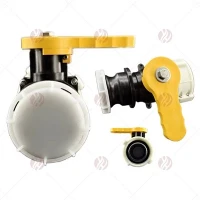

As a trusted supplier of IBC Threaded Caps, I've witnessed firsthand the critical role these components play in various industries. One of the most frequently asked questions I encounter is about the tear strength of an IBC Threaded Cap. In this blog, I'll delve into the concept of tear strength, its significance for IBC Threaded Caps, and how it impacts the overall performance of these essential components.
Understanding Tear Strength
Tear strength is a measure of a material's resistance to tearing when a force is applied. In the context of IBC Threaded Caps, it refers to the ability of the cap to withstand the forces that could cause it to tear or rupture. This is particularly important because IBC (Intermediate Bulk Container) caps are used to seal large containers that hold various substances, including liquids, powders, and granular materials. A cap with insufficient tear strength could lead to leaks, spills, and contamination, which can have serious consequences for both the product and the environment.
The tear strength of an IBC Threaded Cap is influenced by several factors, including the material used, the design of the cap, and the manufacturing process. Different materials have different tear strengths, and choosing the right material is crucial for ensuring the cap's performance. For example, high-density polyethylene (HDPE) is a commonly used material for IBC Threaded Caps due to its excellent chemical resistance, durability, and relatively high tear strength.
Importance of Tear Strength for IBC Threaded Caps
The tear strength of an IBC Threaded Cap is of utmost importance for several reasons. Firstly, it ensures the integrity of the seal. A cap with high tear strength is less likely to tear or rupture during handling, transportation, or storage, which helps to prevent leaks and spills. This is especially important for containers that hold hazardous or valuable substances, as even a small leak can have significant consequences.
Secondly, tear strength affects the cap's ability to withstand external forces. IBCs are often subjected to rough handling, vibrations, and temperature changes during transportation and storage. A cap with sufficient tear strength can withstand these forces without tearing, ensuring that the container remains sealed and the contents are protected.
Finally, tear strength is also important for the safety of the users. A cap that tears or ruptures easily can pose a risk of injury, especially if the container holds sharp or hazardous materials. By choosing a cap with high tear strength, you can minimize the risk of accidents and ensure the safety of your employees and customers.
Factors Affecting Tear Strength
As mentioned earlier, several factors can affect the tear strength of an IBC Threaded Cap. Let's take a closer look at some of these factors:
Material Selection
The material used to manufacture the cap is one of the most important factors affecting its tear strength. Different materials have different properties, and choosing the right material is crucial for ensuring the cap's performance. As mentioned earlier, HDPE is a popular choice for IBC Threaded Caps due to its excellent chemical resistance, durability, and relatively high tear strength. Other materials that can be used include polypropylene (PP), polycarbonate (PC), and nylon.
Design
The design of the cap also plays a significant role in its tear strength. A well-designed cap will have a uniform thickness, smooth edges, and a strong thread. These features help to distribute the stress evenly across the cap, reducing the risk of tearing. Additionally, the design of the cap should be compatible with the container it is used with, ensuring a proper fit and a secure seal.
Manufacturing Process
The manufacturing process can also affect the tear strength of the cap. A high-quality manufacturing process will ensure that the cap is made to the correct specifications and that there are no defects or weak spots. This includes using the right equipment, following the correct procedures, and conducting quality control checks at every stage of the manufacturing process.
Measuring Tear Strength
Tear strength is typically measured using a standardized test method. One of the most commonly used test methods is the Elmendorf tear test, which measures the force required to tear a specimen of the material. The test involves cutting a specimen of the material into a specific shape and size, and then using a pendulum to apply a force to the specimen until it tears. The force required to tear the specimen is then recorded and used to calculate the tear strength of the material.
It's important to note that the tear strength of a material can vary depending on the test method used, the specimen size and shape, and the testing conditions. Therefore, it's important to use a standardized test method and to ensure that the testing conditions are consistent to obtain accurate and reliable results.
Choosing the Right IBC Threaded Cap
When choosing an IBC Threaded Cap, it's important to consider the tear strength of the cap, as well as other factors such as the material, the design, and the manufacturing process. Here are some tips to help you choose the right cap for your needs:
Consider the Application
The first step in choosing the right IBC Threaded Cap is to consider the application. Different applications have different requirements, and you need to choose a cap that is suitable for the specific application. For example, if you are using the cap to seal a container that holds a hazardous substance, you need to choose a cap that has a high tear strength and is resistant to the chemical properties of the substance.
Choose the Right Material
As mentioned earlier, the material used to manufacture the cap is one of the most important factors affecting its tear strength. You need to choose a material that is suitable for the specific application and that has a high tear strength. HDPE is a popular choice for IBC Threaded Caps due to its excellent chemical resistance, durability, and relatively high tear strength. However, other materials such as PP, PC, and nylon may also be suitable depending on the application.
Look for a Well-Designed Cap
A well-designed cap will have a uniform thickness, smooth edges, and a strong thread. These features help to distribute the stress evenly across the cap, reducing the risk of tearing. Additionally, the design of the cap should be compatible with the container it is used with, ensuring a proper fit and a secure seal.
Choose a Reputable Supplier
Finally, it's important to choose a reputable supplier who can provide you with high-quality IBC Threaded Caps. A reputable supplier will have a good track record of providing reliable products and excellent customer service. They will also be able to provide you with technical support and advice to help you choose the right cap for your needs.
Conclusion
In conclusion, the tear strength of an IBC Threaded Cap is a critical factor that affects its performance and reliability. A cap with high tear strength is less likely to tear or rupture during handling, transportation, or storage, which helps to prevent leaks and spills and ensures the safety of the product and the environment. When choosing an IBC Threaded Cap, it's important to consider the tear strength of the cap, as well as other factors such as the material, the design, and the manufacturing process. By choosing the right cap for your needs and working with a reputable supplier, you can ensure that your IBCs are sealed properly and that your products are protected.


If you're interested in learning more about IBC Threaded Caps or if you have any questions about tear strength or other aspects of these components, please don't hesitate to contact us. We'd be happy to help you choose the right cap for your needs and to provide you with technical support and advice.
References
- ASTM D1922 - Standard Test Method for Propagation Tear Resistance of Plastic Film and Thin Sheeting by Pendulum Method
- ISO 6383 - Plastics - Films and sheeting - Determination of tear resistance - Part 1: Trouser tear method
- TAPPI T414 - Tear Resistance of Paper (Elmendorf Type Tear Tester)