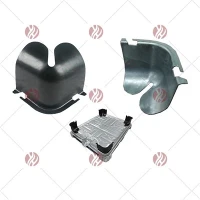

As a trusted supplier of IBC Screw Lids, I often encounter inquiries about the compression strength of these essential components. In this blog post, I will delve into the concept of compression strength, its significance for IBC Screw Lids, and how it impacts the performance and safety of intermediate bulk containers (IBCs).
Understanding Compression Strength
Compression strength refers to the maximum amount of pressure a material or structure can withstand before it fails or deforms under compressive forces. In the context of IBC Screw Lids, compression strength is a critical property that determines their ability to seal IBCs effectively and prevent leakage, even under challenging conditions.
The compression strength of an IBC Screw Lid is influenced by several factors, including the material used, the design of the lid, and the manufacturing process. High - quality materials such as high - density polyethylene (HDPE) or polypropylene (PP) are commonly used for IBC Screw Lids due to their excellent mechanical properties, including good compression strength.
Importance of Compression Strength for IBC Screw Lids
- Leak Prevention: A lid with sufficient compression strength can form a tight seal on the IBC opening. This is crucial for preventing the leakage of the contents, whether it's a liquid chemical, food product, or other substances. Leakage not only leads to product loss but can also pose safety and environmental risks.
- Stacking and Transportation: IBCs are often stacked during storage and transportation. The compression strength of the lids ensures that they can withstand the weight of the stacked containers without being damaged. This helps maintain the integrity of the IBCs and their contents throughout the supply chain.
- Pressure Resistance: In some applications, the contents of the IBC may generate internal pressure, for example, due to chemical reactions or temperature changes. A lid with high compression strength can resist this internal pressure and prevent the lid from popping off or the container from rupturing.
Factors Affecting Compression Strength
- Material Quality: As mentioned earlier, the choice of material plays a significant role in determining the compression strength of an IBC Screw Lid. High - grade polymers with good mechanical properties will generally offer better compression resistance. For example, HDPE has high tensile strength and impact resistance, which contribute to its ability to withstand compression.
- Lid Design: The design of the lid, including its shape, thickness, and the presence of reinforcement features, can also affect its compression strength. A well - designed lid with a thickened wall or internal ribbing will be more resistant to compression forces.
- Manufacturing Process: The manufacturing process can influence the quality and consistency of the IBC Screw Lids. Injection molding is a common method for producing these lids, and proper control of the molding parameters, such as temperature, pressure, and cooling time, is essential for ensuring uniform density and strength throughout the lid.
Testing Compression Strength
To ensure that our IBC Screw Lids meet the required standards, we conduct rigorous compression strength testing. This typically involves using a compression testing machine to apply a gradually increasing load to the lid until it fails. The maximum load at which the lid fails is recorded as its compression strength.
Our testing procedures are in line with industry standards, such as those set by the International Organization for Standardization (ISO). By adhering to these standards, we can guarantee that our IBC Screw Lids are of high quality and reliable performance.
Compression Strength and Different Types of IBC Caps
In addition to IBC Screw Lids, we also offer IBC Threaded Cap and IBC Screw Cap. While the basic concept of compression strength applies to all these types of caps, there may be some differences in their design and performance.
IBC Threaded Caps are designed to be screwed onto the IBC opening, providing a secure and tight fit. Their compression strength is crucial for maintaining the seal, especially when the IBC is subject to vibrations or movement during transportation.
IBC Screw Caps, on the other hand, are similar to IBC Screw Lids but may have different shapes or sizes. They are also required to have sufficient compression strength to ensure proper sealing and prevent leakage.


Our Commitment as a Supplier
As a leading supplier of IBC Screw Lid, we are committed to providing our customers with high - quality products that meet their specific requirements. We continuously invest in research and development to improve the compression strength and other properties of our IBC Screw Lids.
We also offer customization services, allowing customers to choose the material, color, and design of the lids according to their needs. Our experienced team of engineers and technicians is always ready to provide technical support and advice to ensure that our customers get the best - suited IBC Screw Lids for their applications.
Conclusion
The compression strength of an IBC Screw Lid is a vital property that directly impacts the performance and safety of IBCs. By understanding the factors that affect compression strength and conducting proper testing, we can ensure that our IBC Screw Lids provide reliable sealing and protection for the contents of the IBCs.
If you are in the market for high - quality IBC Screw Lids, IBC Threaded Cap, or IBC Screw Cap, we invite you to contact us for more information. Our team is eager to discuss your specific requirements and help you find the ideal solutions for your IBC needs.
References
- ISO standards related to intermediate bulk containers and closures.
- Technical literature on polymer materials and their mechanical properties.